Application · AI Data Center Power

AI Data Center Power Solutions

Medium-voltage solid-state transformers and SiC power electronics for data centers that need megawatt-scale power, high efficiency, small footprint and grid-friendly operation.

Home/Applications/AI Data Center Power
The Challenge

AI Workloads Are Breaking Conventional Power Delivery

AI training and inference clusters push rack power from 10–15 kW to 30–100+ kW. At facility scale, that means 100+ MW campuses — and the conventional power chain is struggling to keep up.

  • Efficiency loss: MV transformer → LV distribution → UPS → server PSU stacks up to 5–8% loss — millions of dollars per 100 MW campus
  • Space pressure: Line-frequency transformers and multiple conversion stages consume premium facility floor space
  • Grid constraints: Utilities increasingly require power quality support, harmonic limits and fast response from large loads
  • DC transition: Server power is fundamentally DC — the AC conversion chain is redundant overhead
  • Cooling: Every lost percentage point becomes heat that must be removed
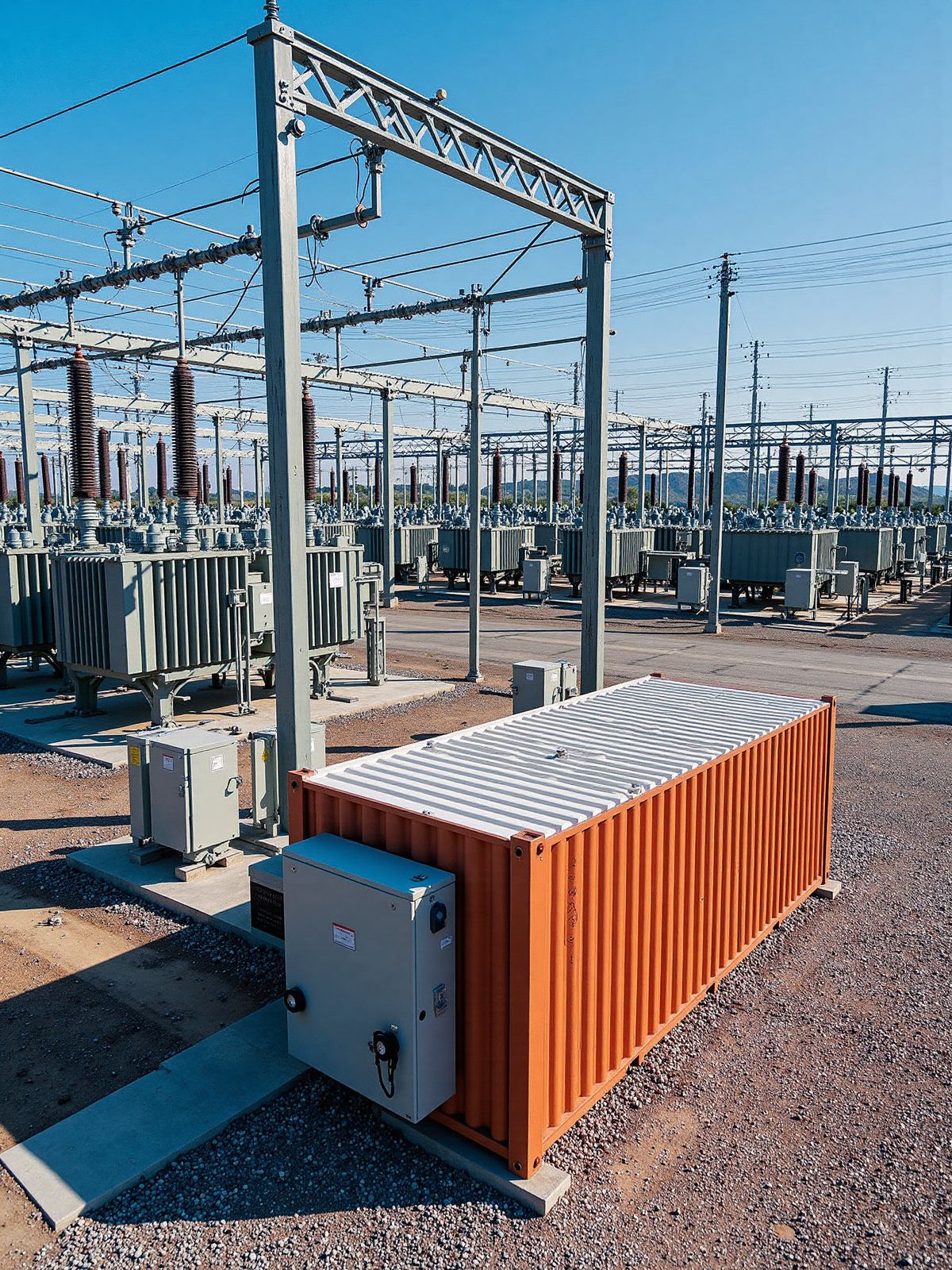
Utility Grade SST for AI Data Center Power
Our Solution

MV SST: Direct Medium-Voltage to DC, Without the Loss Chain

A solid-state transformer takes 10/20/35 kV directly to the DC bus the servers actually need — eliminating transformer and UPS conversion stages.

>99% Efficiency per Stage

SiC-based conversion cuts losses to under 1% per stage. Fewer stages, less heat, lower PUE contribution and smaller cooling plant.

800 V DC Distribution

Direct DC output feeds rack-level power distribution without AC/DC conversion at each level — fewer components, lower cost, higher reliability.

Compact & Modular

High-frequency magnetics replace line-frequency iron — a fraction of the volume. Modules scale from pilot to 100 MW campuses.

Grid-Friendly by Design

Reactive power, harmonic cancellation and fast fault response as native functions — smooth utility approval and interconnection.

Redundancy Built In

Modular power-cell architecture supports N+1 and N+2 configurations — a failed cell is isolated without taking the facility down.

Future-Proof Architecture

Liquid-cooled, high-density designs ready for next-generation 800 VDC racks and increasing rack power density.

Reference Capabilities

What We Can Engineer for Your Facility

ParameterReference Range
MV Input10 kV / 20 kV / 35 kV (custom on request)
DC Output800 V DC / 48 V DC distribution buses
Power Rating100 kVA – 5 MVA per unit; campus-scale via modular cells
Conversion Efficiency≥ 99% at full load (SiC-based)
Grid SupportReactive power, harmonic cancellation, voltage regulation, LVRT
RedundancyN+1 / N+2 modular power cells
CommunicationIEC 61850, Modbus TCP/RTU, DNP3, facility BMS integration
CoolingLiquid cooling (standard for > 500 kVA), forced air for lower ratings
StandardsIEC 60076, IEC 61850, IEEE 1547, ISO 9001

Related: Future Power Architecture · How AI Data Centers Drive New Power Requirements

Building Blocks

What We Supply for Data Center Power Projects

MV SiC Power Modules

1200–3300 V SiC MOSFET modules for SST cells and DC-DC stages — the core switching technology.

View Modules →

High-Frequency Magnetics

HF transformers and inductors engineered for 10–100 kHz operation — the size and weight breakthrough.

View Components →

Complete SST Systems

Project-custom MV-to-DC SST units with control, protection and grid-code compliance delivered as a system.

View Solution →
FAQ

Common Questions

Can an SST replace both the utility transformer and the UPS?

For the conversion function, yes. An MV-to-DC SST can replace the MV/LV transformer and the input stage of the UPS chain. Battery backup and ride-through are still provided at the DC bus, which is actually simpler and more efficient than today's AC UPS design.

How much footprint can we realistically save?

Depending on configuration, an SST-based system typically occupies 30–50% of the space of an equivalent transformer + UPS chain, because high-frequency magnetics are a fraction of line-frequency transformer size and the DC distribution removes redundant conversion cabinets.

Is SST technology proven enough for critical facilities?

MV SST is at the pilot-to-early-commercial stage. That is exactly why we recommend a staged approach: feasibility study → prototype → pilot deployment with factory test reports at every stage, before campus-scale rollout.

Request an SST Solution for Your Facility

Tell us your facility size, utility voltage and power architecture — our engineers will map the SST approach and respond within 24 hours.

Request SST Solution